


Your air conditioning system relies on dozens of electrical components working together to keep your Central Florida home cool. When one of those components fails, the symptoms can range from minor inconveniences to complete system failures.
In Orlando, where air conditioners run hard for most of the year, electrical issues are among the most common reasons homeowners call for emergency AC repairs. Ignoring these warning signs can lead to costly component damage, reduced efficiency, and potential safety hazards.
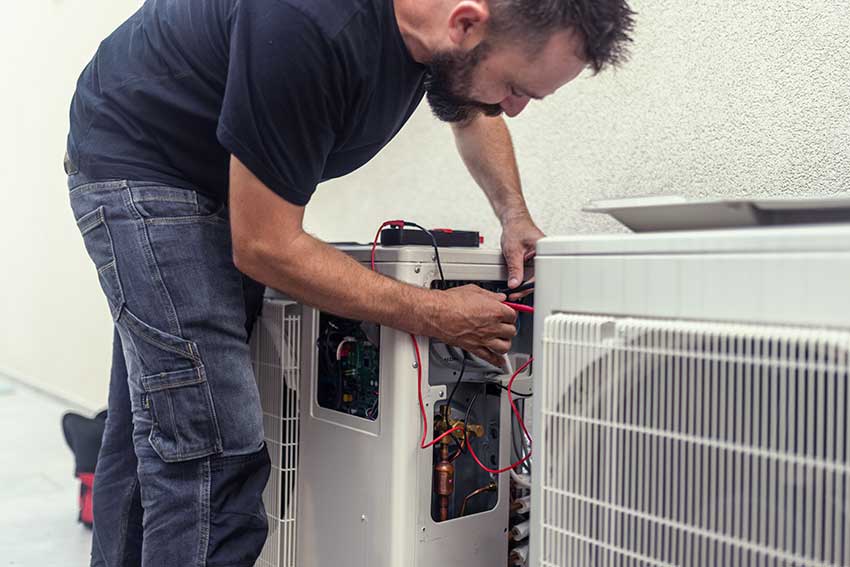
⚠️ IMPORTANT SAFETY WARNING: Residential HVAC systems operate on high-voltage (220V) electricity. Components like capacitors can retain dangerous electrical charge even after the power is shut off. Never attempt to diagnose or repair AC electrical issues yourself—always call a licensed professional.
Warning Signs of AC Electrical Problems
Before an electrical component dies completely, it usually drops a few hints. Contact a professional immediately if you notice:
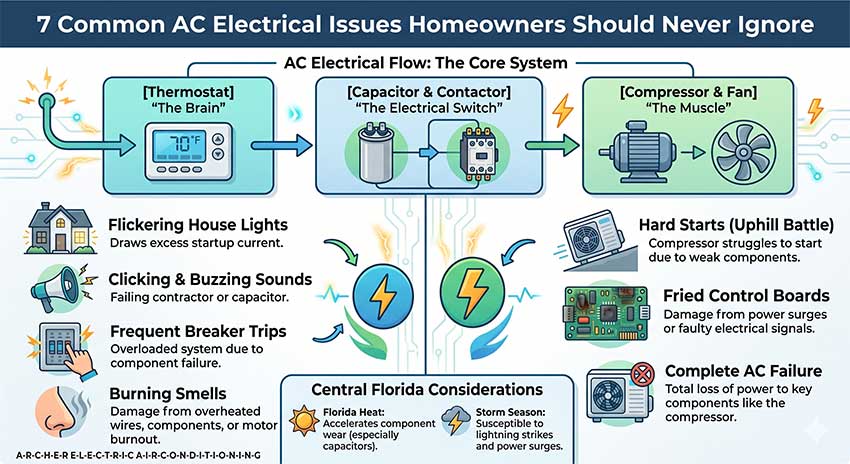
- The “Click-and-Buzz”: The outdoor unit clicks repeatedly but won’t start.
- Flickering House Lights: Your indoor lights dim for a second every time the AC kicks on.
- Burning Odors: A distinct plastic or electrical burning smell near your indoor or outdoor units.
- Frequent Breaker Trips: Your AC completely shuts down, tripping your main electrical panel.
- The “Hard Start”: The outdoor unit shudders and hums loudly before the fan finally spins.
7 Common AC Electrical Failures
1. Tripped Circuit Breakers
A circuit breaker protects your home by shutting off power when it detects a dangerous electrical overload. If your AC trips the breaker once, it could be a fluke. If it happens repeatedly, stop resetting it. Forcing an overloaded system to run can fry your compressor or melt internal wiring.
2. Failed Capacitors
Think of a capacitor like a heavy-duty battery that gives your motors the massive surge of energy they need to start running. Central Florida’s relentless summer heat bakes these components. When they bulge, leak oil, or lose charge, your AC won’t start, and you will hear a faint humming sound outside.
3. Worn or Pitted Contactors
The contactor is a physical switch that opens and closes thousands of times a year to send high-voltage power to your compressor. Over time, the electrical connections can become pitted, burned, or even welded shut by bugs or electrical arcs. If your outdoor fan keeps running even when you turn the AC off at the thermostat, you likely have a welded contactor.
4. Damaged or Loose Wiring
Electrical wiring naturally deteriorates due to age, constant system vibrations, and intense Florida humidity. Loose wires generate extreme heat and electrical arcing, which can damage nearby components and pose a fire hazard if left unaddressed by a technician.
5. Thermostat Communication Failures
Sometimes, a dead AC is actually just a dead “brain.” Loose control wires, bad batteries, or corrupted circuit boards inside modern smart thermostats can prevent the unit from sending the “cool” signal to your outdoor system, leading to short-cycling or total unresponsiveness.
6. Fried Control Boards
The control board is the central computer of your indoor unit. It routes power and timing to every single component. Because it is packed with sensitive microprocessors, a small voltage spike can instantly fry the board, leaving your entire system completely unresponsive.
7. Compressor Electrical Burnout
The compressor is the heart of your air conditioner. If it suffers an electrical short or “burnout,” it is usually the most expensive repair an HVAC system can face. Catching failing capacitors and contactors early is the best way to protect your compressor from taking the brunt of an electrical failure.
The Florida Factor: Thunderstorms and Power Surges
Central Florida experiences some of the highest lightning activity in the country. A nearby strike doesn’t even have to hit your house to cause damage; it can send a massive voltage surge through the utility lines, instantly frying your AC’s control boards, capacitors, and variable-speed fan motors.
How to Protect Your Investment
- Install a Dedicated HVAC Surge Protector: This device sits inside your outdoor disconnect box. It acts as a lightning shield, absorbing high-voltage spikes before they can reach and destroy your expensive AC components.
- Schedule Regular Maintenance: During a routine tune-up, an Ambrose Air technician will measure the exact electrical output of your capacitors and check your contactors for wear. We can swap out a failing $50 part before it leaves you stranded without AC on a 95°F Saturday afternoon.
Trust Ambrose Air for Safe, Professional AC Repair
Electrical problems never resolve themselves; they only get worse and more expensive the longer they are ignored. Since 1990, Ambrose Air has provided honest, dependable HVAC services to homeowners throughout Orlando and Central Florida. Our licensed, bonded, and insured technicians have the specialized tools and expertise to diagnose and repair electrical HVAC issues safely and accurately.
As a family-owned company certified as a Daikin Comfort Pro, we back every job with our promise of “Honesty and Quality at a Fair Price.”
Don’t risk your comfort or safety. If your air conditioner is acting up, contact Ambrose Air today to schedule a professional diagnostic check.

Ambrose Air has served Central Florida since 1990, providing residential and commercial HVAC installation, repair, and maintenance. Now backed by Westcoast Mechanical Contractors, LLC, and certified as Daikin Comfort Pros, our team of experienced technicians works to a simple standard: Honesty and Quality at a Fair Price.