


When shopping for a new air conditioner, you’ll likely hear the term “AC tonnage.” Many homeowners assume it refers to the equipment’s weight, but that’s not actually the case.
AC tonnage refers to the cooling capacity of your system. Choosing the right tonnage is one of the most important factors in maintaining comfort, controlling energy costs, and protecting the lifespan of your HVAC equipment.
If you’re considering an AC replacement in Orlando or anywhere in Central Florida, understanding AC tonnage can help you make a more informed decision.
What Does AC Tonnage Mean?
In the HVAC industry, a “ton” measures cooling capacity rather than weight.
One ton of air conditioning equals 12,000 BTUs (British Thermal Units) of cooling per hour. Common residential AC sizes include:
- 2-ton systems (24,000 BTUs)
- 3-ton systems (36,000 BTUs)
- 4-ton systems (48,000 BTUs)
- 5-ton systems (60,000 BTUs)
The larger the tonnage, the greater the cooling capacity.
Why Proper AC Sizing Matters
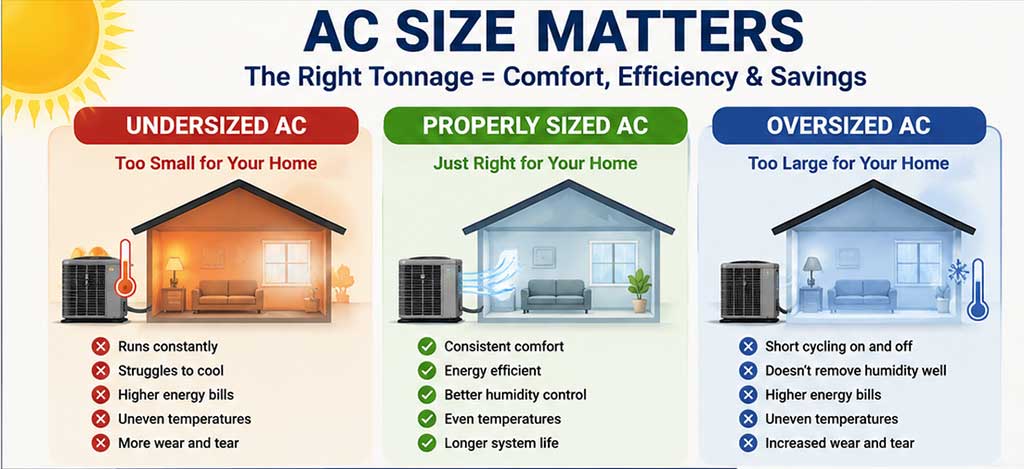
Many homeowners believe that bigger is always better when it comes to air conditioning. However, an oversized system can create just as many problems as one that’s too small.
Problems With an Undersized AC
If your air conditioner doesn’t have enough cooling capacity, it may:
- Run continuously during hot weather.
- Struggle to maintain indoor temperatures.
- Increase utility bills
- Experience excessive wear and tear.
- Create hot spots throughout the home.
Problems With an Oversized AC
An oversized system may cool the home too quickly, failing to properly remove humidity.
This can lead to:
- Short cycling
- Higher indoor humidity levels
- Reduced comfort
- Increased component wear
- Higher maintenance costs
In Florida’s humid climate, proper dehumidification is just as important as cooling.
How Many Tons Does Your Home Need?
The correct AC size depends on a number of factors, including:
-
- Square footage
- Ceiling height
- Insulation levels
- Number of windows
- Sun exposure
- Number of occupants
- Ductwork design
- Local climate conditions
How Many Tons Does Your Home Need?
While every home is unique, you can use this general breakdown as a starting baseline.
Important Florida Notice: Because of Central Florida’s extreme summer heat and humidity, local homes often require higher cooling capacities than the national averages listed below.
| Home Size | Typical AC Size Baseline. | What This Means for Orlando |
|---|---|---|
| 1,000–1,500 sq ft | 2 – 3 Tons | Ideal for smaller homes or newer energy-efficient builds. |
| 1,500–2,000 sq ft | 3 – 4 Tons | The average size range for most Central Florida suburban homes. |
| 2,000–2,500 sq ft | 4 – 5 Tons | Larger homes often require zoning or a robust ductwork layout. |
These estimates give you a starting point, but they should never replace a professional load calculation. Factors such as ceiling height, window orientation, and insulation quality can dramatically affect these numbers.
Why Orlando Homes Require Special Consideration
Central Florida’s climate places significant demands on air conditioning systems.
High temperatures, elevated humidity, and long cooling seasons require careful HVAC sizing. A system that may work well in another state may not perform properly in Orlando’s climate.
That’s why professional HVAC contractors perform load calculations rather than relying exclusively on square footage.
What Is a Manual J Load Calculation?
A Manual J calculation is an industry-standard method used to determine the proper size of an HVAC system.
This assessment considers factors such as:
- Home dimensions
- Insulation values
- Window types
- Air leakage
- Occupancy
- Orientation to the sun
The result helps ensure your new system is properly matched to your home’s cooling needs.
AC Tonnage and SEER Ratings: What’s the Difference?
When selecting a new air conditioner, homeowners often hear about both tonnage and SEER ratings.
While AC tonnage measures cooling capacity, SEER (Seasonal Energy Efficiency Ratio) measures energy efficiency.
Think of it this way:
- Tonnage determines how much cooling your system provides.
- SEER determines how efficiently it delivers that cooling.
Both factors are important when choosing a new HVAC system. A properly sized system with an appropriate SEER rating can help improve comfort while reducing energy consumption.
For a deeper explanation of efficiency ratings, check out our guide on What Is SEER and Why Does It Matter?
Trust Ambrose Air for Professional AC Installation
Choosing the right AC size requires experience and expertise.
Since 1990, Ambrose Air has helped homeowners throughout Orlando and Central Florida select properly sized AC systems for installation, ensuring lasting comfort and efficiency.
Our licensed, bonded, and insured technicians perform professional load calculations and provide honest recommendations based on your home’s unique needs. As a family-owned company, we remain committed to our promise of “Honesty and Quality at a Fair Price.”
With more than 70 years of combined industry experience and certification as a Daikin Comfort Pro, you can trust our team to help you make the right investment.
Schedule Your Free AC Replacement Estimate
If you’re considering a new air conditioner, don’t leave sizing to guesswork. Don’t risk buying a system that leaves your home damp and your energy bills soaring.
Contact Ambrose Air today to schedule a free estimate and learn which AC system is right for your Central Florida home.
Frequently Asked Questions About AC Tonnage
How Does AC Tonnage Affect the Cost of a New Air Conditioner?
In general, higher-tonnage systems cost more because they provide greater cooling capacity and often require larger components.
However, tonnage is only one factor that affects the price of a new HVAC system. Other considerations include:
- SEER2 efficiency rating
- Brand and model
- Installation complexity
- Ductwork modifications
- Indoor air quality upgrades
- Smart thermostat options
A professional HVAC evaluation can help determine the best balance between comfort, efficiency, and budget.
How Can I Find the Tonnage of My Current Air Conditioner?
The easiest way is to locate the manufacturer’s model number on the outdoor condenser unit.
Many model numbers include a cooling capacity indicator. For example:
- 024 = 2 tons (24,000 BTUs)
- 036 = 3 tons (36,000 BTUs)
- 048 = 4 tons (48,000 BTUs)
- 060 = 5 tons (60,000 BTUs)
If you’re unsure how to read the model number, an HVAC professional can quickly identify your system’s tonnage during an inspection
Can I Replace My Existing AC With a Higher-Tonnage Unit?
The easiest way is to locate the manufacturer’s model number on the outdoor condenser unit.
Many model numbers include a cooling capacity indicator. For example:
- 024 = 2 tons (24,000 BTUs)
- 036 = 3 tons (36,000 BTUs)
- 048 = 4 tons (48,000 BTUs)
- 060 = 5 tons (60,000 BTUs)
If you’re unsure how to read the model number, an HVAC professional can quickly identify your system’s tonnage during an inspection
Can I Replace My Existing AC With a Higher-Tonnage Unit?
Not always.
Installing a larger air conditioner without performing a load calculation can lead to short cycling, humidity problems, and increased wear on the system.
Before upgrading to a larger unit, a qualified HVAC technician should evaluate your home’s cooling requirements and the capacity of your ductwork.
Is AC Tonnage More Important Than SEER?
Both are important, although they serve different purposes.
Tonnage determines how much cooling your system can provide, while SEER measures how efficiently it delivers that cooling. A properly sized system with a high SEER rating typically offers the best balance of comfort and energy savings.

Ambrose Air has served Central Florida since 1990, providing residential and commercial HVAC installation, repair, and maintenance. Now backed by Westcoast Mechanical Contractors, LLC, and certified as Daikin Comfort Pros, our team of experienced technicians works to a simple standard: Honesty and Quality at a Fair Price.